Table of contents
Efficient land management often hinges on selecting the right equipment for dealing with organic debris. Understanding the differences between mulchers and chippers can significantly impact the outcome of projects ranging from site clearing to landscape maintenance. Dive into the following sections to unravel which machine best fits your specific needs, ensuring both productivity and sustainability on your land.
Understanding mulchers and chippers
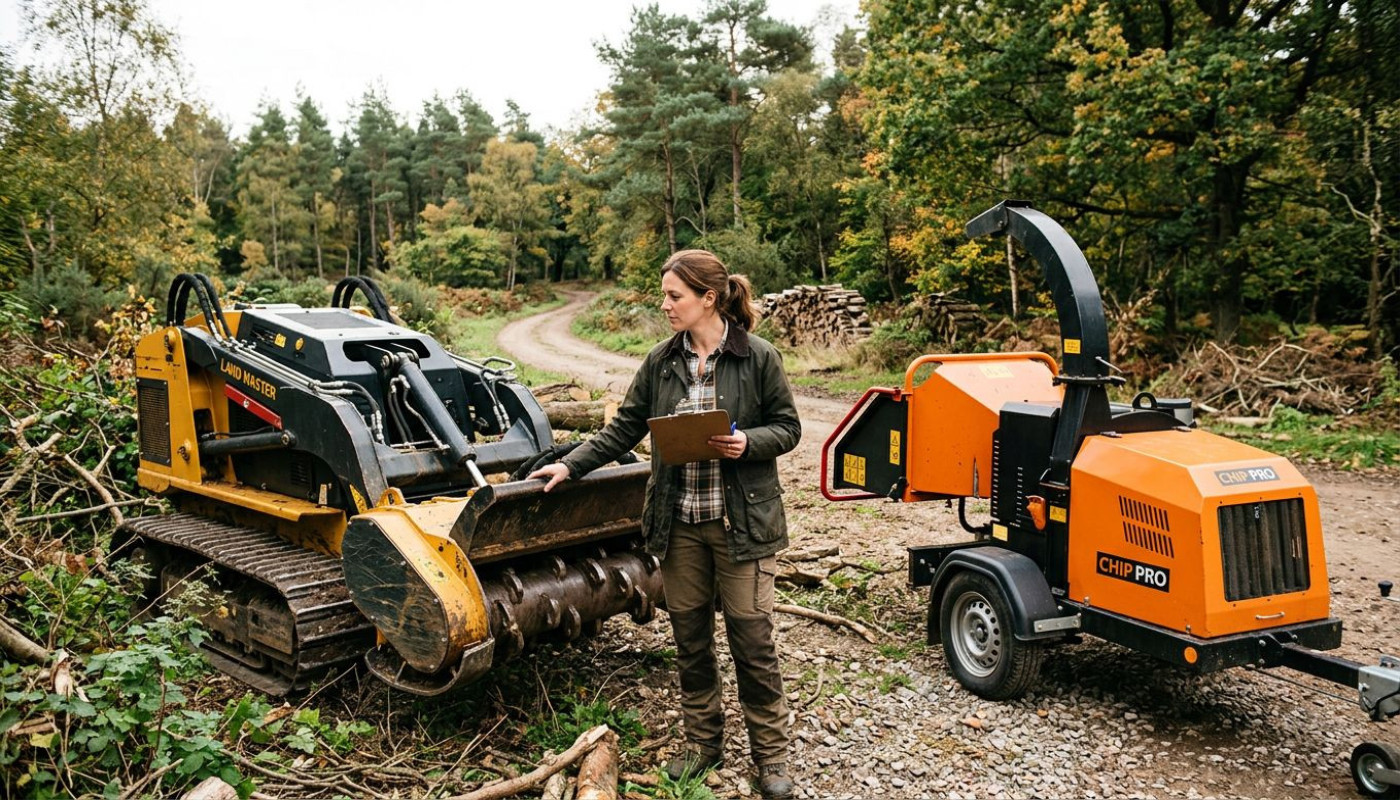
Mulchers and chippers both play a pivotal role in land management by breaking down organic debris, yet they differ significantly in their core functions and design. Mulchers utilize a rotor system equipped with sharp, swinging or fixed blades to shred vegetation directly into fine mulch. This process is highly effective for clearing undergrowth, brush, and small branches, making mulchers the preferred equipment for maintaining fields, utility lines, or reclamation projects where even reduction of material is desired. In contrast, chippers employ a heavy-duty rotor system with knives or hammers to process larger wood pieces, such as tree limbs and trunks. Chippers are engineered to transform substantial, solid wood into uniform chips that can be used for landscaping, biomass fuel, or as a base for pathways.
When conducting an equipment comparison, it is vital to consider the intended application and the type of organic debris encountered. Mulchers are best suited for softer, fibrous plant material, leaves, and smaller woody growth, providing a ground cover that promotes soil health. Chippers excel in situations requiring the disposal of substantial tree waste, where their robust rotor systems efficiently manage thicker, denser wood. For land management professionals, selecting between mulchers and chippers depends on the nature of the vegetation and the desired end product. In settings where both fine mulch and wood chips are needed, integrating both machines into the workflow can yield optimal results and increase operational efficiency.
Assessing land management needs
When evaluating land clearing equipment, begin by analyzing property size, as larger areas often require machinery capable of handling high volumes efficiently. Mulchers are typically suited for spreading shredded vegetation across expansive spaces, which aids in biomass reduction and enhances soil health. In contrast, chippers are generally more effective for smaller properties or targeted tasks where processed material such as wood chips will be repurposed for landscaping or composting. Carefully consider the dominant type of vegetation present—dense underbrush and mixed woody debris may favor a mulcher, whereas thicker branches or felled trees often necessitate a chipper. Reflecting on the intended end use of the processed material is also vital, as it will influence the machinery best aligned with overall land management goals. By systematically assessing these factors, landowners can make an informed decision that optimizes both land clearing efficiency and the sustainable use of resulting biomass.
Efficiency and operational considerations
When assessing the operational efficiency of mulchers versus chippers, several technical factors play a key role. Mulchers generally provide rapid surface coverage, breaking down vegetation, brush, and light woody material directly into the topsoil, which makes them suitable for broad-area management and site preparation. Chippers, by contrast, specialize in processing larger branches or logs into chips, offering greater value in wood recycling or biomass generation. Both machines demand attention to torque output, as sufficient torque ensures smooth material flow and prevents frequent blockages that can impede productivity. High-output equipment—typically powered by robust engines or hydraulic systems—becomes necessary for large-scale operations or when tackling particularly dense or tough vegetation.
Maintenance remains a defining factor in the long-term viability of both machine types. Mulchers commonly require regular checks on cutting teeth, bearings, and hydraulic systems, while chippers need vigilant blade sharpening, lubrication, and attention to feed mechanisms. Neglecting these maintenance routines leads to reduced operational efficiency and increased risk of equipment failure. Consistent power requirements should also be considered: mulchers often draw substantial power continuously across wide areas, while chippers may demand surges in power—especially when processing thicker materials. Ensuring compatible tractors or dedicated power units can effectively match these power needs will help extend machinery lifespan and maximize productivity.
For optimal usage, operators should tailor their approach to site conditions and intended outcomes. In scenarios involving light brush or extensive undergrowth, mulchers excel due to their broad coverage and minimal material handling. Chippers are suited for situations where clean chip output is required, such as preparing biomass fuel or landscaping material. Regularly calibrating feed rates, monitoring torque output, and promptly addressing wear components not only preserves machine efficiency but also enhances safety. Selecting between the two should involve analyzing the volume and type of material, frequency of use, and available support resources for ongoing maintenance.
Situations demanding high-output equipment include post-storm cleanups, utility line clearing, and commercial land clearing, where rapid throughput and reliable performance are non-negotiable. Operators focused on maximizing operational efficiency should weigh both the immediate power requirements and the long-term maintenance commitments of their chosen equipment. For further technical comparisons, detailed specifications, or service recommendations, navigate to this site for comprehensive information tailored to mulchers and chippers designed for demanding land management tasks.
Environmental impact and sustainability
When selecting between mulchers and chippers for land management, considering the environmental impact is vital for responsible stewardship. Mulchers operate by shredding vegetation into fine particles that remain on-site, directly contributing to soil health through a process known as soil amendment. This process enriches the soil with organic matter, enhancing water retention and nutrient cycling, which supports a resilient ecosystem and promotes sustainability. In contrast, chippers convert branches and trunks into larger wood chips, often transported offsite or used as mulch elsewhere. While both machines aid in waste management, mulchers reinforce local soil amendment, fostering healthy microbial activity and reducing erosion, whereas chippers may provide beneficial wood chips but can remove essential biomass from the ecosystem.
From a sustainability perspective, mulching retains nutrients within the landscape and supports ongoing ecosystem functions, such as habitat for insects and fungi, while also decreasing the need for chemical fertilizers. Chipping, on the other hand, can enable efficient waste management but may lead to nutrient depletion if organic debris is consistently removed. Thoughtful integration of these technologies, aligned with the objectives of land management and tailored to the specific ecosystem, can enhance soil health and promote biodiversity. Prioritizing practices that favor in situ soil amendment and nutrient cycling helps maximize the positive environmental impact of routine land maintenance.
Making the best equipment choice
Selecting the right equipment for land management projects requires careful decision-making based on unique project demands and available resources. When weighing mulchers against chippers, the equipment choice should start with a clear evaluation of the types and volumes of organic material, site accessibility, and desired end-product, such as mulch for soil enrichment or chipped wood for biomass energy. A land management strategist recommends conducting a comprehensive cost-benefit analysis, factoring in initial investment, maintenance requirements, operational efficiency, and adaptability to diverse project scales. Assessing these variables empowers landowners and managers to align their equipment choice with both immediate project goals and broader land stewardship objectives.
Applying a structured decision-making framework aids in synthesizing all technical information and user priorities. For instance, decision trees or matrices allow users to compare mulchers and chippers across parameters like fuel consumption, labor requirements, and environmental impact. Evaluating the long-term benefits, such as improved soil health from mulching or potential revenue from wood chips, ensures that the selected solution contributes sustainably to the land’s productivity and value. By balancing current needs against future outcomes, the equipment choice becomes a strategic investment, optimizing both the practical and ecological returns of land management projects.
Similar articles


